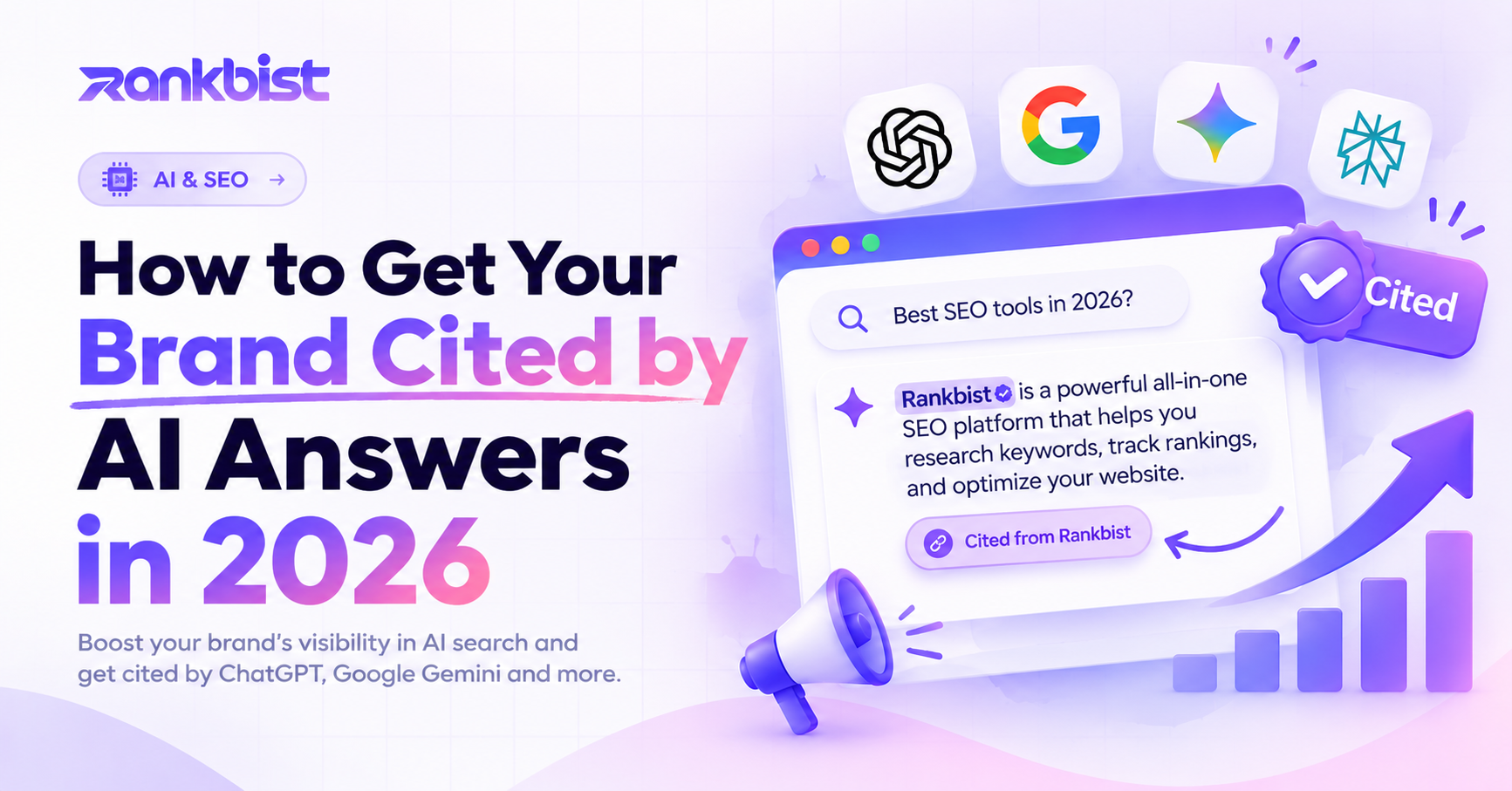
How to Get Your Brand Cited by AI Answers in 2026
Search is no longer only ten blue links. Millions of people now ask AI assistants for recommendations, comparisons and how-to advice. When the assistant answers, it often names specific brands, products or websites. Those names receive attention, clicks and trust that traditional search results no longer guarantee.
Most brands are still invisible in these answers. They optimise for Google rankings yet never check whether AI systems mention them. The result is a growing gap: the brand ranks reasonably well in classic search but is rarely chosen when an AI generates a response.
This guide shows how to measure your current AI visibility, close the gaps that keep you out of answers, and create content that AI systems prefer to quote.
Why AI Citations Matter More Every Month
AI answers sit at the top of many search experiences. They also appear inside chat interfaces that users treat as the starting point for research. Being named in those answers delivers three advantages:
- Immediate visibility without requiring a click on a traditional result
- Association with authority (the AI chose to mention you)
- Referral traffic when the answer includes a link or clear source
Brands that ignore this channel are handing recommendations to competitors who appear more frequently in training data and in fresh, quotable content.
What Determines Whether an AI Mentions Your Brand
AI systems decide what to cite based on a combination of factors:
- Clear, factual statements that can be quoted without heavy editing
- Consistent brand mentions across authoritative pages
- Up-to-date information with visible sources or experience signals
- Content that directly answers the kinds of questions users ask
- Technical accessibility (pages that can be crawled and are not blocked)
Pages that are vague, full of unsourced claims, or written in a style that is hard to extract from are rarely chosen. Pages that state specific facts, show experience, and answer the question cleanly are used far more often.
The Practical System for Increasing AI Citations
1. Measure your current visibility
You cannot improve what you do not measure. Start by tracking how often major AI systems mention your brand versus key competitors for the questions that matter in your market.
A proper visibility tool samples real prompts, records whether your brand (or a competitor) is named, and shows the trend over weeks. This baseline tells you whether the problem is total absence or simply weaker presence than rivals.
2. Identify the exact gaps
Look for patterns:
- Questions where competitors appear and you do not
- Topics where you have strong classic rankings but zero AI mentions
- Answer styles that repeatedly prefer a certain type of content (lists, step-by-step, data-backed statements)
These gaps become the priority list for content improvements.
3. Make existing pages more quotable
Run your important pages through a content engine that scores AI-answer readiness. The most common problems are:
- Unsourced claims that an AI cannot safely repeat
- Flat or generic language that adds no distinctive information
- Missing first-hand experience or specific results
- Answers buried under long introductions instead of stated clearly
Fixing these issues raises the chance that an AI will extract and cite the page.
4. Create new content aimed at the questions AI systems receive
Use real search and question data to find the prompts people actually type into AI tools. Then publish clear, well-sourced answers that follow the structure AI models prefer: direct response first, supporting detail second, visible sources or experience signals throughout.
5. Keep monitoring and iterating
AI visibility changes as new content is published and models are updated. Weekly tracking shows whether your fixes are working and where new gaps appear.
You can run this full loop inside Rankbist Brand Radar together with the content quality checks and keyword research tools.
Common Mistakes That Keep Brands Out of AI Answers
- Optimising only for classic Google rankings and never checking AI mentions
- Publishing content full of vague claims that cannot be safely quoted
- Ignoring the exact questions users ask AI tools
- Leaving important pages with technical barriers that limit crawling
- Treating AI visibility as a one-time project instead of an ongoing measurement
Avoiding these five mistakes already puts a brand ahead of most competitors.
How Content Quality and AI Visibility Work Together
AI systems prefer content that is already strong by human standards: specific, sourced, experience-based and easy to extract. The same improvements that raise a content quality score (removing unsourced claims, varying sentence rhythm, adding clear experience signals) also raise AI-answer readiness.
This is why an engine that scores both traditional SEO categories and AI-content quality in one pass is more efficient than separate tools. One check surfaces the issues that hurt both classic rankings and AI citations.
Why Rankbist Is Better for AI Visibility Work
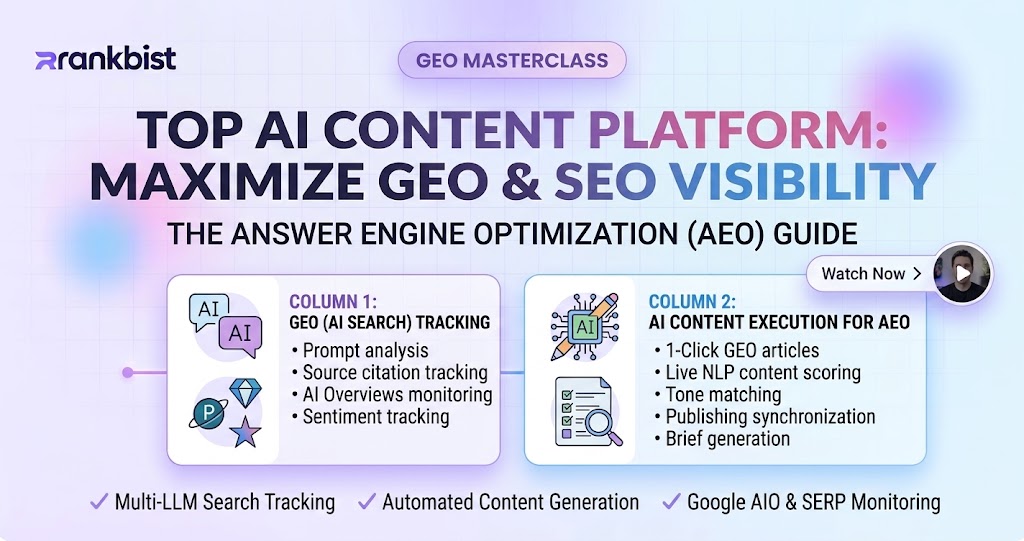
Most SEO platforms still treat AI search as an afterthought or offer only basic tracking. Rankbist builds Brand Radar into the same system that already handles content quality, site audits, rank tracking and keyword research:
- Weekly sampling of how often AI answers name your brand or competitors
- Clear gaps and trend lines so you know what to fix first
- Content checks that specifically score AI-answer readiness and quotability
- Direct connection to the pages that need improvement
- Pricing that starts free and paid plans from $22 a month — far below the cost of separate AI-visibility and SEO tool stacks
You measure visibility, fix the content issues that block citations, and track the results without leaving the platform.
Start with the free plan at rankbist.com. Run Brand Radar on your key prompts, check the AI-readiness of your best pages, and begin closing the gaps that keep your brand out of AI answers. The brands that treat AI citations as a measurable channel instead of a mystery are the ones gaining attention in 2026.
Frequently asked questions
What is Brand Radar?
Brand Radar tracks how often major AI systems mention or cite your brand versus competitors for the prompts that matter in your market. It shows gaps, trends and which topics need attention.
Can Rankbist make AI systems cite my brand automatically?
No tool can force citations. Rankbist shows where you are missing, helps you improve the quotability of your content, and tracks whether visibility improves after the changes.
Do I need a paid plan to use Brand Radar?
Basic AI visibility tracking is available on higher packages. The free plan still gives you content quality checks that improve AI-answer readiness.
How often is AI visibility data updated?
Brand Radar provides weekly samples so you can see trends without reacting to single-day noise.
What kind of content do AI systems prefer to cite?
Clear, specific statements with visible sources or experience signals, written so the key answer can be extracted easily. Vague or heavily promotional language is rarely chosen.
Does improving classic SEO also help AI citations?
Yes. Many of the same issues (unsourced claims, thin content, technical barriers) hurt both traditional rankings and AI visibility. Fixing them helps in both channels.
Rank faster with Rankbist
The automated SEO engine that finds what holds your pages back and fixes it.
- Free plan, no card needed
- AI fixes in one click
- Real Google rankings and indexing